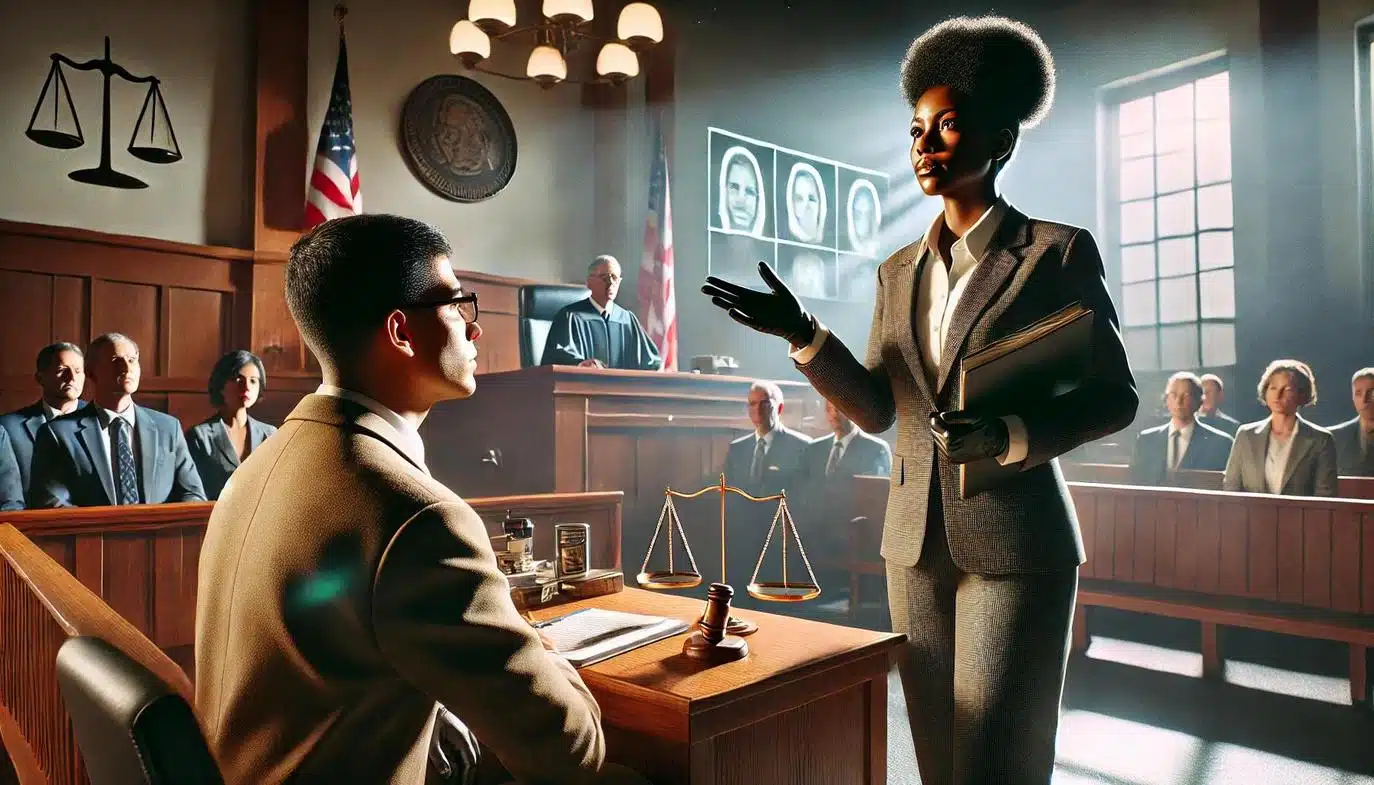
A lab report can look clean on paper and still fall apart in court. That is why forensic evidence challenges matter so much when someone’s freedom depends on more than a confident expert, a polished chart, or a phrase like “scientific match.” In U.S. criminal cases, jurors often hear forensic testimony with a kind of quiet awe, as if the evidence arrived untouched from a machine that cannot be wrong.
Real trials are messier than that. Evidence passes through hands, rooms, storage lockers, software systems, and human judgment calls before it reaches a jury. A defense lawyer does not need to prove every test was fake. The sharper move is often showing where doubt entered the process and why that doubt matters. For readers following legal topics through trusted digital publishing resources, criminal justice coverage often shows how public faith in science can clash with courtroom reality.
The hard truth is simple. Forensic work can help solve crimes, but it can also mislead when handled poorly, explained loosely, or treated as stronger than it is.
How Forensic Evidence Challenges Begin With the Crime Scene
The first weakness often appears long before a lab analyst opens a kit or checks a sample under bright light. A crime scene is not a museum display. It is a living space, a street corner, a car, a motel room, or a backyard where panic, weather, people, and time can change what officers later treat as fixed proof.
Defense lawyers pay close attention to the first few hours because those hours shape everything that follows. A mistake at the start can travel through the whole case wearing a lab coat.
Why chain of custody issues can weaken physical proof
Chain of custody sounds dry until you realize it is the paper trail that tells the court who touched the evidence, when they touched it, where it moved, and how it was stored. If that trail has gaps, the defense can argue that the jury cannot know whether the item tested in the lab is the same item collected at the scene.
A gun found in an apartment, for example, may pass from one officer to an evidence technician, then to a property room, then to a firearms examiner. Each transfer should be documented. If one transfer has no signature, no timestamp, or no clear storage record, the defense does not need drama. The missing step is the drama.
Small gaps do not always destroy a case, but they can change how jurors hear the evidence. A prosecutor may still argue the item is reliable, yet the defense can press the human question: if the government wants a conviction, why could it not protect the proof with care from the start?
How contamination turns strong evidence into a weaker story
Contamination is not always the result of bad faith. Sometimes it comes from rushing, poor packaging, shared tools, crowded scenes, or officers walking through spaces before evidence gets marked. That is why criminal defense strategy often starts with the scene log, not the lab result.
DNA creates a useful example. A tiny amount of skin cell material can move through casual contact. If several officers handled a doorknob, searched a car, or placed items on the same surface, a later DNA result may tell a less direct story than the prosecution suggests.
The counterintuitive part is that better technology can sometimes create more confusion. Tests can now detect smaller traces than older methods could find. That power helps investigators, but it also raises harder questions about how the material got there. Presence does not always equal guilt.
Forensic Evidence Challenges Inside the Laboratory
Once evidence reaches the lab, many jurors assume the human risk fades. The white coat creates comfort. The machine prints a number. The chart looks official. Yet forensic science still depends on people making choices, and those choices deserve testing.
This is where forensic evidence challenges become sharper because the defense can move from broad suspicion to precise pressure. The goal is not to attack science itself. The goal is to separate sound science from weak procedure, overstated testimony, or work shaped by expectation.
When lab protocols reveal more than the final report
A final lab report is often too neat. It gives the answer without showing every decision behind it. Defense lawyers ask for bench notes, quality control records, calibration logs, proficiency testing, and the lab’s written procedures because the real story often lives in those details.
A blood test, for instance, may look simple in the final paperwork. The deeper record may show whether the machine was checked on schedule, whether the sample was stored at the right temperature, and whether the analyst followed the lab’s own rules. One missed step may not prove innocence, but several missed steps can make the result look less solid.
Good defense work treats the lab like any other workplace. People get tired. Systems get overloaded. Supervisors miss things. A laboratory can have smart staff and still produce a weak result in a rushed case.
Why expert bias can enter even technical testing
Bias does not always look like prejudice or dishonesty. It can appear when an examiner knows too much about the suspect, the alleged confession, or the detective’s theory before analyzing the evidence. That extra context can push judgment in a direction the examiner may not even notice.
Pattern-based fields carry special risk here. Fingerprint comparison, footwear impressions, tool marks, and bite mark evidence often involve human interpretation. An examiner may look at two marks and decide whether they are close enough to call a match, but the process can be less clean than jurors expect.
A careful lawyer may ask whether the examiner worked blind, meaning without details that could influence the conclusion. That question can land hard because it feels fair. If the evidence speaks for itself, why did the analyst need to know whom police suspected?
When Expert Testimony Overstates Scientific Certainty
The courtroom can turn limited findings into powerful language. A scientist may say “consistent with,” a prosecutor may argue “matched,” and a juror may hear “only one person could have done it.” Those are not the same idea, yet they can blur together fast during trial.
Strong criminal defense strategy pushes back on that blur. The defense may not need to exclude the evidence. It may only need to show the expert used words that carried more certainty than the science could support.
How DNA evidence problems appear in mixed samples
DNA often feels unbeatable because people have been trained by television, news stories, and public messaging to treat it as near perfect. Single-source DNA from a clean sample can carry major weight. Mixed samples are a different animal.
A mixed sample may contain DNA from two, three, or more people. Analysts then try to interpret who may have contributed to the mixture. The more people involved, and the smaller the sample, the harder the interpretation becomes. Defense lawyers often focus on whether the statistical method fits the sample and whether the expert explained the limits plainly.
A real-world example could involve DNA found on a shared firearm in a car with several passengers. The presence of someone’s DNA may mean they handled the gun. It may also mean transfer occurred through shared surfaces, close contact, or earlier innocent handling. The question is not whether DNA exists. The question is what the DNA can prove.
Why forensic expert cross-examination targets language first
Cross-examination often begins with words because words shape belief. An expert who says an item “matched” may need to admit that no forensic method gives magical certainty. A defense lawyer may ask whether the field has known error rates, whether the test was blind, and whether another trained examiner could disagree.
This can feel like splitting hairs, but it is not. Criminal trials turn on standards of proof, and loose wording can push jurors past reasonable doubt without them noticing. The defense’s job is to slow the room down.
The most effective cross-examination does not sound hostile. It sounds patient. The lawyer lets the expert agree to small truths until the big truth becomes hard to avoid: the evidence may support the prosecution, but it does not carry the case by itself.
How Defense Lawyers Turn Weak Science Into Reasonable Doubt
A defense lawyer rarely wins by shouting that every test is wrong. Jurors do not like that, and it often feels desperate. The better approach is narrower, cleaner, and more believable: show exactly where the science stops and where prosecution storytelling begins.
That distinction matters because jurors need permission to doubt. When the government presents technical evidence, many people feel unqualified to question it. A good defense gives them a fair reason to look closer without asking them to reject science as a whole.
What makes forensic evidence admissibility a turning point?
Before jurors ever hear certain testimony, a judge may decide whether the science is reliable enough for trial. This is where forensic evidence admissibility becomes a major battleground. The defense may challenge the method, the expert’s qualifications, or the way the test was applied in the case.
Some evidence survives that challenge and still becomes weaker in front of a jury. Other evidence may be limited, excluded, or stripped of its strongest language. That can change the entire shape of a trial because the prosecution may have built its case around a result that no longer sounds as certain.
A practical example comes from bite mark evidence, which has faced serious criticism in criminal cases. A defense lawyer may argue that the method lacks enough reliability to support a strong identification. Even if the judge allows some testimony, the defense can work to stop the expert from claiming more than the method can honestly show.
How reasonable doubt grows from small technical failures
Reasonable doubt does not always arrive as one stunning revelation. Often, it grows from a series of small failures that begin to point in the same direction. A missing evidence log, a contaminated surface, a rushed report, and an overconfident expert can combine into a serious problem for the prosecution.
This is why defense lawyers build a case theme around reliability. They do not ask jurors to become scientists. They ask jurors to judge care, discipline, and honesty. That is a familiar task for ordinary people.
The unexpected insight is that weak forensic evidence can hurt the prosecution more than no forensic evidence at all. When jurors sense the government dressed uncertainty in scientific clothing, trust can break. Once that happens, every other part of the case starts to look different.
Conclusion
Science belongs in the courtroom, but it should never get special treatment simply because it sounds technical. A criminal trial is not a lab seminar. It is a public test of whether the government can prove guilt with evidence that was collected carefully, tested fairly, and explained honestly.
The best defense lawyers understand that jurors do not need a lecture on every scientific detail. They need a clear path through the noise. They need to see where a result is strong, where it is limited, and where confidence has outrun proof. That is the real value of forensic evidence challenges in a criminal case.
Anyone facing charges should treat forensic proof with respect, not fear. The right legal team can examine the scene work, lab process, expert testimony, and admissibility issues before those details harden into a conviction story. Speak with a qualified criminal defense lawyer before accepting any forensic claim as the final word.
Frequently Asked Questions
What are common forensic evidence challenges in criminal trials?
Common challenges include broken chain of custody, contamination, poor lab procedures, unclear testing methods, weak expert qualifications, and overstated conclusions. Defense lawyers often focus on whether the evidence was handled properly and whether the expert’s testimony goes beyond what the science can prove.
Can DNA evidence be challenged by a defense lawyer?
Yes. DNA can be challenged when the sample is mixed, degraded, tiny, transferred indirectly, or collected under poor conditions. A defense lawyer may also question the lab’s interpretation, statistical method, contamination controls, and whether the result actually connects the accused person to the crime.
How does chain of custody affect forensic evidence?
Chain of custody shows who handled the evidence from collection to trial. Missing signatures, unclear storage records, or unexplained transfers can raise doubt about whether the evidence was preserved correctly. A weak chain does not always exclude evidence, but it can reduce its impact.
Why is expert witness testimony challenged in court?
Expert testimony is challenged because jurors may give it extra weight. Defense lawyers test whether the expert used reliable methods, stayed within the limits of the science, and avoided exaggerated claims. The goal is to stop opinion from being treated as certainty.
What does contamination mean in forensic evidence?
Contamination means outside material may have affected the evidence before testing. It can happen through poor packaging, shared tools, crowded crime scenes, or careless handling. Even accidental contamination can make a forensic result less reliable in a criminal trial.
Can forensic evidence be thrown out before trial?
Yes. A judge may exclude forensic evidence if the method is unreliable, the expert is not qualified, or the testing process was seriously flawed. Sometimes the evidence is allowed, but the judge limits what the expert may say about it.
How do defense lawyers challenge fingerprint evidence?
They may question the quality of the print, the comparison method, examiner bias, documentation, and whether another examiner verified the result independently. Fingerprint evidence can be persuasive, but it still depends on human judgment and must be tested carefully.
Why should defendants question forensic reports?
A forensic report often gives only the final conclusion, not every step behind it. Defendants should question reports because mistakes can hide in collection notes, lab records, software settings, and expert assumptions. Careful review can reveal weaknesses that matter at trial.